
Why do people say Traditional Chinese Medicine doesn’t work?
In this honest and eye-opening conversation, four licensed TCM doctors break down how viral wellness trends, oversimplified advice, and quick-fix culture are distorting a 3,000-year-old medical system. We explore why proper diagnosis matters, why “natural” doesn’t always mean safe, and how true healing requires balance — not extremes. If you’ve ever questioned whether TCM really works, this episode might completely change your perspective.
Episode Description
In this episode, four licensed Traditional Chinese Medicine doctors come together to unpack one big question: Why do people say TCM doesn’t work?
From viral ear seed trends to “30 jujube” recipes, parasite cleanses, and aggressive surgeries, we explore how misinformation, quick-fix culture, and influencer wellness are distorting a 3,000-year-old medical system.
We discuss:
Why one-size-fits-all herbal advice can backfire
The danger of overdosing “harmless” foods like jujube or turmeric
Why removing symptoms isn’t the same as healing the root
Surgery vs. internal environment: what most people aren’t told
Why TCM is not slow — but it is individualized
How to follow seasonal living and understand your constitution
TCM isn’t about trends, aesthetics, or shortcuts. It’s about balance, diagnosis, and working with your body — not against it.
If you’ve ever wondered whether Chinese medicine really works, this episode will change the way you think about it.
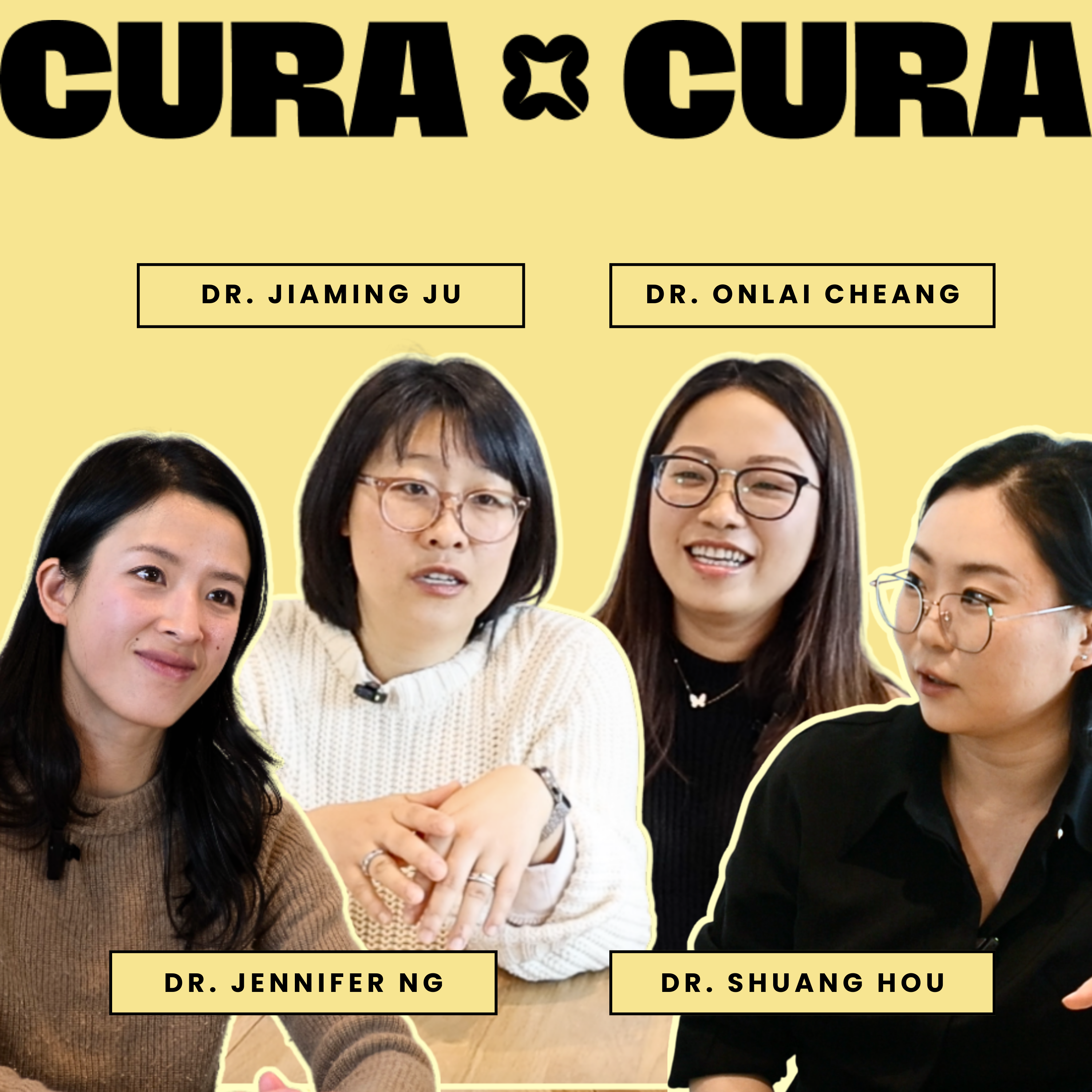
👩🏻⚕️ Featured Doctors
Dr. Jennifer Ng – Licensed Acupuncturist, Facial Acupuncture & Face Reading Instagram: @acu.by.jen
Dr. Jiaming Ju – Licensed Acupuncturist, Chronic & Autoimmune Conditions Instagram: @byjiamingju
Dr. Onlai Cheang – Licensed Acupuncturist, Dermatology & Hormone Health Instagram: @onlai.acupuncture
Dr. Shuang Hou – Licensed Acupuncturist, Founder of Cura x Cura, Chinese Herbal Medicine Instagram: @shuanghoulac
Transcript
Host (00:50)
Today we have a group of TCM doctors who are specializing in pain management, facial acupuncture, dermatology, hormone imbalance, and autoimmune diseases. And they are very passionate about TCM. Would you like to introduce yourself?
Dr. Jennifer Ng (01:05)
I’m Dr. Jen and I’m licensed acupuncturist specializing in facial acupuncture. also a face reader.
Dr. Jiaming Ju (01:12)
Hi, I’m Jiaming Ju. I’m a Chinese medicine practitioner specializing in chronic conditions, especially autoimmune conditions, and I’m also a longevity economist.
Dr. Onlai Cheang (01:23)
Hi, this is Dr. Onlai Cheang here. My focus is on dermatitis, hormone imbalance, and Gut Health
Dr. Shuang Hou (01:29)
Hey everyone, this is Shuang Hou I’m a licensed acupuncturist and also the founder of Cura Cura. It’s very honored to meet everyone here together. All my favorite acupuncturists are from LA, so it’s very honored to have this podcast today.
Host (01:43)
Nice. Today we are going to talk about some trending Chinese wellness that we see on social media. I would want to ask each one of you, what’s your perspective on this? What have you been seeing that you think is trending a lot but you have some opinion about it?
Dr. Jennifer Ng (01:45)
My biggest one is the ear seeds. So right now I’m noticing, especially as a facial acupuncturist, there’s so much that people want to do that really want to like get that quick fix of kind of like lifting and sculpting the face. But the problem with using so many ear seats at once without doing anything grounding is that it can lead to a lot of issues for people with underlying health conditions like pregnancy, high blood pressure. So there’s a lot of ⁓ issues in terms of the safety measure of it. And so to me, that’s the biggest red flag.
Dr. Shuang Hou (02:37)
What do you feel like the… You know there’s a trend of ear seeds where a lot of people using crystals to make it prettier. how do you… What’s your…
Dr. Jennifer Ng (02:48)
I think that’s less invasive. I think that’s fine as long as you are, because the point of it is to stimulate the ear points. However, that’s just based on the microcosm of the ear treating the body as a whole. With facial acupuncture in particular, the goal is to treat the body’s internal systems first before you even approach the face. And so when you approach the face, then after seeing the circulation benefit, after seeing the color restoring the skin, you automatically will get the fluid drainage.
boost in complexion and the sculpting of the skin just from the attention you give to the body. But you’re only focused on one thing, it takes away from the balance of everything else that has to occur in order to achieve a health benefit too. Because it’s not just beauty, it’s also health.
Dr. Shuang Hou (03:35)
That makes sense. And I also hear a story where I think Onlai you mentioned that to me where you know in China when we treat like the ear seed we only do one ear not the both
Dr. Onlai Cheang (03:47)
Right
actually transitionally in Chinese medicine, we always start with the left ear. ⁓ This is what my professor taught me when I was in China. I wasn’t sure why, but I think yang is more like on the left side first is rising. So we want to rise the energy first from the feet to the head. And also another main key concept for that is like we don’t want to over stimulate the ears. So typically 10 to 12 is the maximum on one ear because sometimes when you having too much accumulation for the brain, the brain probably causing more, you know, information or like over acting to some kind of problems, well, you might not know for it.
Dr. Shuang Hou (04:25)
Exactly. Yeah. one staff She’s still at the school and then they use the ear seed and then she put a lot in the ear seed and then after even like after taking out the ear seed she’s still getting like really painful sensations and it’s affecting her sleep.
Dr. Onlai Cheang (04:39)
That’s probably overstimulating.
Dr. Jennifer Ng (04:42)
It’s not just going to affect your sleep. It’s also going to make rises and dips in your blood pressure. And that’s the scary part of it all. It’s because there’s nothing grounding you while you’re overstimulating. This is very, very ⁓ unsafe for pregnancy, especially in the first trimester. So when I see these things, especially on somebody who is pregnant, that’s what worries me the most because these are the type of people who are going to go looking for things like sculpting the face, helping the complexion because pregnancy is one of the times where your face blows up, right? There’s anything, if there’s anything you can do to like look a little nicer, it really does something to the psyche where it helps to make you feel like a little more yourself. And so that’s where the integrity of the medicine gets lost from these trends. And unfortunately, that’s what trends are doing to this medicine in my opinion.
Dr. Shuang Hou (05:30)
And just to clarify, do you recommend people when they’re in their pregnancy doing ear seed or no?
Dr. Jennifer Ng(05:37)
It depends on what you’re doing it for. For example, one of the ways that I use ear seeds is I look at the ear and I see if there’s any spots, if there’s any veins or if there’s any little marks that tell me that something is out of balance. Then I only do those points because those are the clear signs, visual signs of how there’s something out of balance, right? So if you put it too much, then you risk overstimulation again. And then with overstimulation can come inflammation, can have dehydration.
It can have so many different types of ⁓ side effects that really Chinese medicine doesn’t have a tendency to even do because we always consider the balance of everything. Once you kind of go into the area of taking things out of balance, that’s when side effects occur.
Dr. Shuang Hou (06:23)
Yeah, exactly. I think that’s the most important concepts of traditional Chinese medicine, which is balancing everything. And I think that’s why in traditional way, we’re using Wang Bu Liu Xing Zi 王不留行子 instead of the metals or crystals or the plastic seeds. Because Wang Bu Liu Xing is also having, moving the qi, promoting the circulations and moving the blood. So you’re now getting that painful sensations and just a stuck in that one spot. So it’s one thing to notice
notice on the current trend is, you know, remember like what is the correct way of doing things is very important.
Dr. Jennifer Ng (07:01)
Yeah, or at least don’t call it something of our medicine. Yeah. Right? Because then you’re just tainting our name and our practice. You call it something you want, you know?
Dr. Shuang Hou (07:04)
Exactly. I think it’s a lack of the professionalism. so even though, you know, there’s missed leading informations coming from those videos. ⁓ to some extent, it’s still like providing or contributing the value to the cultural dissemination, right? So it’s still giving the audience a chance to understand like Chinese culture or traditional Chinese medicine, or even the, you know, yangsheng 养生, which is the traditional wellness practice. So it has that meaning, but it’s just a lack of the professional layer of it. So really encouraging all the doctors to speak up on those trends and to provide the professional advises to those public audiences so that at least they have a platform to learn from.
Dr. Onlai Cheang (08:01)
Definitely more like education people to educate this Chinese medicine in this social media platform. And I actually appreciate that, although it does give us more like cons, more kind of like linking Chinese medicine to a more trendy way, but missing the medical part. we as a practitioner, we also need to speak out, like try to teach in an educational or medical way so that people can use it properly. ⁓
Dr. Shuang Hou (08:28)
But also remember, the practitioner or the clinician are not content creators, right? We’re not full-time content creators. So we’re really busy with all the clinic works and healing patients. So we don’t have that much energy to do those works. At the current stage, think it’s a very must to do. Definitely.
Dr. Onlai Cheang (08:49)
A lot of time I got this message, it’s actually from my page and they sent me the quote, like, hey, how do you think about this?
Dr. Jiaming Ju (08:56)
I think the whole being Chinese thing is very curious, ⁓ which is an understatement, given we’re all Chinese, right? And we’re not only Chinese, we’re a Chinese medicine doctor. And I’m a second generation growing up in a family clinic. And then you will see people dumping 30 jujubes And then say, this is really good for period cramp, right?
As an economist who already is pretty cynical in nature, seeing something like this and just say, hey, look at all these red jujubes and then like, you should just take it regardless of what kind of pure and caramboid condition you have, I’d be irresponsible. Do you know, do you know jujubes can give you acne? Jujube can make you more thirsty. Jujube can really increase your blood sugar if you’re already pre-diabetic, right? Like there is no absolute good stuff in Chinese medicine.
Dr. Jiaming Ju (09:49)
I mean, as we say in Chinese culture, there is nothing that you just get that’s absolutely good. So to then for someone to wear a chongsam and then like say, hey, I am Chinese, therefore I know everything that is about Chinese, including something that one have to, all of us have gone to school for, for like, you know, from four to seven years and get licensed and then say, this is how you treat period cramp regardless of whatever you have. It’s deeply troubling.
You know, I grew up in the family business and see with my dad patients waiting in the snow day and night for like 40 to 60 patients a day in China. And that kind of knowledge and wisdom cannot really be simplified into 30 jujubes, which by the way, one never use 30 jujubes. Please don’t do that.
Dr. Jennifer Ng (10:41)
Please explain how many jujubes you should actually use.
Dr. Jiaming Ju (10:44)
For anybody using safely, three, I think is the safest dosage. ladies and gentlemen, okay, there is same thing as like, you know, a while back, we already reported from FDA how people got poisoned with tumor accused, right? And then poison the liver. All the Chinese medicine, Dr. friends of mine like, yeah, that makes total sense. We’ve been saying for ages, like that’s not the right way of using it because you don’t ever use a single food.
Even when you consider it as food, a lot of people are like, turmeric is just spice, no problem. Turmeric is really code emitter, like in other medicine, it goes through the blood. If you want something to poison your liver really fast, you can take consistent large dosage of turmeric for like 30 days, you’ll probably will get it. And the medicine for the longest time have really been put and wrong in so many ways, primarily because it has been used by the wrong hands, right?
Mahuang, which is so fundamentally in our medicine, got banned because a supplement company use it as a weight loss drug and kill people. it’s the same thing. Like if I reverse the question to people and say like, hey, if you are, ⁓ if you are a just an ordinary citizen without any Western medicine training, and then you’re advocating how to use parasitimal, and then get parasitimal banned, can you imagine that? If you were about a harmless. And that’s how I feel jujube very strongly.
Dr. Jennifer Ng (12:15)
Even with carrots, Like if you too many carrots, skin pigment will literally change. But it’s the whole concept of too much of one thing is never a good thing. There’s that phrase, Like, 太补有毒 And like there’s like too much, which means that like too nourishing, too tonifying can actually result in toxicity for the body. And so that’s like one of the key phrases that I feel like a lot of people just don’t understand, especially in the Western world, where it’s like,
you there’s a super food or there’s a one size fit all approach. You know, there’s none of that exists in Chinese medicine and the reality of it all. In fact, one of the reasons why Chinese medicine takes four, five, six, seven years of study is because there’s so much that is ingrained in you of how to balance out one and another. There’s so much complexity that comes in the concept of balance to the point where It doesn’t even exist today. know, there’s no such thing as balance in this world because things are always fluctuating. But what TCM can teach you is how to move with the seasons, move with like the ⁓ different things that are seasonal, like foods or weather or how to dress or how to prepare your body, how to protect your circulation. This is the foundation of it all. But I think that what people get lost in is the idea like, it’s good for me. There’s no such thing as just good.
Dr. Jiaming Ju (13:40)
There isn’t a quick pill. There is consistent steady effort. There is listening to your body and respond to the season and then constantly evolve with the season and with yourself. I think growing up in this tradition is like very normal and I get it, it’s not normal for a lot of things. It’s a different culture. But then I also hope especially people from the Asian descent, definitely do not use the name of Chinese medicine or your grandma’s recipe and dump 30 jujubes in a tea and then say, this is I rid of my period cramp. Girl, I dare you drink that five times a day. You’re going to be for sure pre-diabetic. So yeah, don’t use our Medicine’s name.
Dr. Shuang Hou (14:27)
at least add some ginger in there.
Dr. Onlai Cheang (14:30)
So at the end it’s all about never one single herbs, always customized formula. You want things to balance the temperature of the herbs.
Dr. Jiaming Ju (14:38)
Or even like you don’t know how to do it. You’re like, jujube is fine. Have two Don’t have 30. Yeah, it’s not that difficult. Don’t get greedy and say like, hey, I’m going to feel amazing after this. I dare you. If you have that much of like jujubes, you’re going to have bloating. You’re probably going to feel nauseous, right? You’re going to feel gusseting and things. And then what people will think, ⁓ Chinese medicine told me this. We never said anything like that. Okay, four all of us. No licensed or Chinese medicine practitioner will ever give that advice. So, yeah.
Dr. Jennifer Ng(15:07)
You know, I have to say though, like, so I know the three of you, did the three of you grow up here in America? Okay, so I was born in America though. So like I understand like the reason why like there’s this need or pull to like try and do 30 at once though. Like at least, because my thing is if I can’t have compassion for it, I will get upset. But if I can find the compassion, then at least there’s an understanding of why it even occurs, right? And so if we can take the approach of like the American approach, of like everything here is extreme, right? If you’re going to school, you’re signing up for all the extracurriculars, you’re doing all the things, or you’re doing absolutely nothing at all. And there’s no in-between. Culturally, there’s no in-between type of balance approach to anything, even when it comes to beverages, you know, it’s like the more ice the better. Or if it’s like, I’m not going to do ice, okay, then I have to have it hot. You know, there’s no in-between. So just from the nature of that, culturally, I could see the misinformation or like the approach to it would be very different from if you grew up in a different type of culture that already taught you like, if you didn’t sleep, then you need some rest. Here, it’s like a work hard, play hard culture, or just like do absolutely nothing. There’s no in between whatsoever.
Dr. Shuang Hou (16:21)
Yeah, but I also feel like it’s not only like Western people doesn’t get the idea of balancing like some Chinese people. We also don’t really understand like, for example, the meaning of tonifying like 补, right? A lot of Chinese people still think, you know, like, ⁓ 补 is giving you whatever that you need when you feel weak.
Dr. Jiaming Ju (16:36)
Chinese are the worst.
Dr. Shuang Hou (16:45)
or putting a lot of supplements in your body, but it’s actually not the original meaning of tonifying. So 补 in Chinese is actually, think about there’s like a bucket with a hole in it, And then your 补 is actually like patching the hole. And then in traditional Chinese medicine, there’s so many ways of patching the hole. Like one way is 以通為补, right? Like tonification through the regulation, right? So if you have Dampness where you have like a weak digestion systems then whatever in your nutrition they put your body is not going to be absorbed or put in the right place. So what you do is you’re actually needs to you know drain the dampness and make your stomach and spleen function very well, then you add stuff in there, so it goes to the areas where you need
Dr. Onlai Cheang (17:33)
It’s back to the concept of never one single herb, never one jujube. It’s not like you can 补 or 不补 pull. It’s not like you can tonify or not tonify, but it’s like how you Bu how you tonify, in the middle of it you also need to work on the pipes, right? You want to add something to balance it, to make it go from your esophagus to your
Dr. Shuang Hou (17:51)
Like, clean up the channel. Yeah.
Dr. Jiaming Ju (17:53)
Like I think like, you know, we say in herbal formulation, diagnosis is so hard because you do the wrong diagnosis and then it could completely ruin how one will recover from this. I in the actually some of the most puzzling cases and that is in particular important because one, when it comes to me, they’ve gone through like gazillion things, right? And you certainly have to absolutely avoid the idea that, you just need to tonify because you will get to a person to a space where they cannot, no tonification, tonification is turning into positive, poison, like you said.
not a American culture, even Chinese culture kind of thing per say I think it’s the modern world that we live in. Like everyone is just up for a quick fix. But then the reality of the matter, as we all know, especially if you’re having something really chronic, something really puzzling, or au to immune in this case, is that if you don’t know whether this is good for you, you don’t have food trust.
Don’t just listen to some influencers and do 30 jujubes. understand the source of information, understand who is credible and who is not credible is important. But at the same time, like I think all of us are trying to say is like for all the influencers is, I understand the traffic is important, but like you could really hurt someone by sharing false information. That’s true. ⁓
So think about things. You know, your tea will still look presentable and pretty even if you have two jujubes rather than 30.
Dr. Shuang Hou (19:34)
I think right now I’m thinking the formula is I think the most one that we use jujube is the shi zao tang 十枣汤 where there’s only like 10 jujubes but it paired with very toxic draining herbs.
Dr. Onlai Cheang (19:45)
Yeah, that we’re using for ⁓ fatty liver or like the liver was in very serious condition and actually yeah to harmonize the stomach but we also pair with a very purging, very cooling herbs to harmonize the whole formula.
Dr. Jennifer Ng (20:04)
You know what that makes me think of? It’s like when you hear about a recipe, about grandma’s recipe, right? Usually they’re like, ⁓ you know, I just use a pinch of this, a couple of these. Everything is based off of your hand in terms of like your actual dosing. A pinch, a palmful, you know, a handful. Like this is all you need in terms of measurement. So anytime you exceed this, it’s going to be way too much for you.
Dr. Shuang Hou (20:31)
Yeah, you can charge a very high price on jujubes right now because it has the meaning of healing. Where before it’s very cheap products and right now it’s such a…
Dr. Onlai Cheang (20:44)
Jin Yin huang
Dr. Jiaming Ju (20:45)
crazy in Chinese market during COVID. And Jin yin hua, if you, I mean, you and I both being like so deep rooted in formulation in particular, Jin yin hua can ruin your digestion.
Dr. Onlai Cheang (20:47)
yeah.
Dr. Jiaming Ju (20:57)
If you like people like, it’s just some harmless little pretty flowers. It will ruin your digestion. The impact of jin yin hua, the cooling nature is not so different from antibiotics if you use it for long period of time. that’s exactly what happened in China when everyone was like, ⁓ I buy this. Which one is it? Like the one everyone was buying because they think like it’s going to cure their covid immediately. Quick. My dad got so mad. Yeah. That I think had jin yin hua in it.
Dr. Jennifer Ng (21:10)
that’s
Lian Hua Qing Wen when
Dr. Jiaming Ju (21:27)
Exactly. Deeply bitter, deeply cooling, deeply everything. Just the states. Chinese have been doing this to themselves for the longest time, right? Like people just don’t get it.
Dr. Shuang Hou (21:32)
It’s not for everyone though.
Dr. Onlai Cheang (21:41)
no. it just gets sick, normally it’s wind cold attack and they just do the LHQW policy. It makes it more like wind cold, more runny nose coming out. Literally based on the TCM diagnosis, you cannot go wrong.
Dr. Shuang Hou (21:49)
hard to recover.
Dr. Jiaming Ju (21:54)
But let’s be honest, of ourselves are the hardest patients because they come, they know a little, they are not professional, but then you write something to them, something, and then they pick you. Honestly, that’s like the hardest sometimes. It’s like, am I the expert or are you an expert?
But the reality is the same, you know? This is not a, sometimes a cultural thing even. It’s just a fact. It’s like, you go to the doctor because you trust their expertise. You don’t then read something. I mean, I get it, right? Information is everywhere. Use your own judgment is all I’m asking people.
Dr. Shuang Hou (22:32)
But yeah, because we have, as you mentioned, like five to seven years education, right? So, and then we have to pass the certifications and everything.
Dr. Jiaming Ju (22:40)
Six hours of license exam in a very drafting room.
Dr. Jennifer Ng (22:43)
I’ve been in this only 10 years, right? And I say only 10 because I feel like I truly didn’t really understand really good quality diagnosis until I got the patient numbers and like seeing so many people throughout my years of practice until maybe like year 10. Honestly, like only now do I feel pretty sufficient in your diagnosis, treatment pattern diagnosis. And I mean, like,
Honestly, out of all of us, I have it pretty easy because I treat the face. The face is actually pretty simple in comparison to deeper rooted autoimmune conditions, dermatological conditions. It’s a little bit different because I work with less extremes in comparison. So even as a practitioner, we also think that it’s not enough.
Dr. Jiaming Ju (23:24)
Lifelong learning. That’s why it’s so fascinating. And that’s why I understand when people say like, I’m so interested in Chinese medicine, where do I even start? Right? Do you start by reading yellow empress like ancient Chinese texts that comes in gigantic pages? It begins with listening. It begins with not rushing. Right. And that’s like, we can all agree, like that’s the most important.
There isn’t a 30 jujube that’s going to just get you to the point of Chinese medicine. There isn’t just some influencer who gua sha their face and you think that’s how you do it. ⁓ It’s by listening to the right people. It’s by humbling yourself.
Dr. Shuang Hou (24:18)
a lifelong learning process, right? Because we’ve seen people go to school, go to like TCM school at their 50s, 40s, right? So it’s very common. We’re all going to get sick at some point. And, ⁓ you know, if you don’t want to be fooled by all the the doctors or the supplement advertisements, you know, go learn yourself. I think you’re the only one that can save yourself. So it’s very, it’s very meaningful that you know the basic knowledge and then it’s going to benefit for your family as an owner.
Dr. Onlai Cheang (24:50)
What I see most in my clinic is a lot of patients, think they have hormonal imbalance, have lot of infection, inflammation in their body and they want to use a lot of I call cooling herbs to help to train themselves. But sometimes a lot of time for that chronic inflammation, you actually need more warming herbs. Or against the concept, it’s like never one single herb. I can give you a very specific case. That’s a patient, she came in because she has an ear infection.
puffy you know the face was a little bit swollen and she thinks she has a lot of edema that caused by inflammation and she wanted to drink more consacramine tea she wanted to do more like salad, kale but that’s actually giving more edema and water retention in her body and if she comes to see me I want to give her more warming things so for sure one of the ingredients there is probably ginger because ginger is expelling the face, expelling the edema, it’s warming, it’s moving the water to go from the head to the toes. So I think this is also a concept that lot of people are misunderstanding that they think they have information then they will use more cooling thing to heal their body.
Dr. Jiaming Ju (26:04)
It’s also another thing which I realized is very common here where people say parasite clingsing. Right. And I will have patients ⁓ who say like, I’ve done parasite clingsing before and then I felt great. And I’m like, how many times you did it? And she’s like, three times in a year. And the reality of the matter is that I don’t really know whether this is a culture of religion or something where in Christianity, you know, you repel the bad.
You you repel the bad and you remove it by like moving it out, right? Using a strong, aggressive, bitter cold force. So now I think about in the case of a SIBO patient or in the case of like chronic UTI patients, what do you get? You get strong antibiotics every single time, right? It’s the same concept. It’s to repel. It’s to remove. It’s like what Onlai said about inflammation is bad. It’s like you have to remove it. But what…
happens in reality is that you receive something called a Kang Sheng Su 抗生素 resistance, right? you’re like, literally your body is no longer agreeing to the antibiotics. Not only will patients be left with serious chronic conditions, like many people I see, who if they have been sick for a long time, you know, often early childhood with strep throat getting the same treatment, the likelihood of them developing ADHD, anxiety and digestive issues chronic long term is so much higher, right?
But this is a psycho-repeating. You often hear patients saying, I got this, I go, I get antibiotics. I got this, I went for parasite clingsing, then I go again. I want everyone to take a beat and not do anything and think about, if you think last time it didn’t end up well when you did this, why do you think this time is gonna?
is we all need as a society, regardless whether this is China or the United States, is that people need to take a second. Research, listen to your body rather than saying, hey, my friend did this, I’m going to do this too. No, think about you last time you heard your friend, you want to do it. How did that feel? Awful. So why do you think this time is going to be better?
Dr. Jennifer Ng (28:11)
I think that goes into a lot of like this whole, you know, this was good for this person, so it must be good for me. In Chinese medicine, we really value the concept of a constitution. Every single person is unique. The way that you approach life, the way that you eat, the way that you stress, the way that you work. There’s so many different factors that go in. No two people are the same, including twins, right? Like there’s so much assumption that because it works for one person to work for another.
If you’re completely different people, why would the same thing work the same way for both of you?
Dr. Jiaming Ju (28:42)
And also the reality coming from a nerdy economist’s perspective where my job was literally just studying long-term health economics data. I randomly work for the next person, the chance of it working for you is actually very slim. I mean, I have patients who heard someone used nicotine patch to increase energy and she thought it did completely the opposite. Completely ruined her life for a few months.
This is not something you just hear someone do and you try it. It’s your house we’re talking about here. Really listen to your body. And if something doesn’t work for you, like magnesium work for some and doesn’t work for you, don’t do it. Like if anything is just overburdening your liver, like why do that?
Dr. Shuang Hou (29:31)
What I heard is there’s like a one million billion synapses in the cortical sheets on the human brain and every single cell in your body has their own intelligence of working for your health. So please pay attention to those
Dr. Jennifer Ng (29:47)
I think that’s also going into like the whole brain gut connection, you know, like if your body really understands like the mental clarity that can come from listening to your body, like the way that you digest information, the way that you digest your food, the way that you digest your experiences will be wildly different than if you ignore it all the time, which honestly most of the world does, right? It’s very vulnerable to be able to have that trust within yourself. And most of the time we don’t grow up in situations where it’s safe, right? So when we can build that safety within our body,
it really makes it a lot easier to be more in alignment and be able to understand. And that’s usually what I do with face reading too. when I use face reading for my patients, it’s about that self discovery of like, what’s your personality? Like what’s your tendency? What’s your habits? These types of things honestly are really good information to help you understand how you process things, how you, you know, like go about life that either works in favor of your health or against your health.
Dr. Onlai Cheang (31:26)
I can share one of my experience I have with a patient’s case. She actually have a, so she came in because she have a vertigo problem and that has been bothering her for one year. And when I look at her tongue, during her pulse and see her facial compression, I notice a deficiency types. And I asked her diet and things, was like, you know, after we do acupuncture and herbs, I recommend her.
don’t do any salad, don’t do any cold drink. And she was like, you know what? My house has been remodeling. So my kitchen has been renovating for a whole year. So for that whole year, we don’t have stove in the kitchen. So she has to be eating like cold food and two bowls. No wonder why you have that vertigo and now she has sensation. And she’s been going to so many MD, doctor to figure that out. No one really helping her for that. And literally just two treatment, two weeks of herbs. And I have her to stay on that, you know,
warm diet she’s great pretty much she don’t she have no vertigo at all ⁓ nice yeah and then you can see that the ice things we like harmful to your body
Dr. Jiaming Ju (32:27)
one final thing, I think in the world of Chinese medicine, like I see a lot of endopatients, endometriosis, one of the worst was stage four. And then repetitive fibroid, you know, grows patient, a lot of them African American. By the way, if you have anemia, it’s highly likely you’re going to have fibroid, it goes hand in hand. A lot of people wonder like, you do surgery, why does it not remove it? Why does it regrow?
It makes perfect sense to Chinese medicine physicians because uterine is a cold environment. The aggressive intervention, can remove it in the meantime, but it doesn’t fundamentally change the internal environment. This goes both for endometriosis patients, this goes for any uterine ovarian situation or anything. Before surgery should be your last resort.
Unfortunately, we all know in this country is not your last resort. If you have excessive bleeding in the 90s, they’re going to recommend hysterectomy. I still have patients who are young girls who are being recommended partial, I mean, cut. I’m like, seriously? The reality is you have to inevitably, for your own sake, change the internal environment of your house.
To make it a warming, welcome situation, because like I always say, in Game of Thrones, what is our biggest baddie, baddest person is the ice walker. It’s called the ice walker. It’s not called the heat walker because the heat cannot. Actually, it gives you energy. It doesn’t congeal blood. It moves. Ice always slows things down. The reality of the matter is like, so think about it.
please, before you decide to do a aggressive surgery to remove a certain part your body part, I’m just go Onlai and everyone agrees, once you cause something, you cannot regrow. The functionality will be perpetually compromised. This is why a lot of hysterectomy patients of mine who came after, they’re like, why did I mysteriously gain like 50 pounds in a month? Hysterectomy? Why a lot of gallbladder removal patients are like, Wait, why do I still have you know, fat like grease in my stool and I can’t… Gallbladder let her remove them. Right? Like these side effects weaken and I deal with all kinds of complex cases. Yeah, everybody’s fine and we move on. But the reality is you don’t have to get yourself to that place, you know.
Dr. Jennifer Ng (35:04)
Yeah, think there’s a lot of, ⁓ you know, lot of Western medicine focuses on removal of what is bad, right? So if it’s inflammation, steroid, if it’s a ⁓ pathogenic factor, get an antibiotic. If it’s something that’s like overacting inside the body, you remove it. You know, there’s a removal type of process to it. Chinese medicine is a very different approach in the way where it’s like if you see something in such an extreme, you neutralize it.
You neutralize it by either draining it out of the body or boosting where it’s deficient. You there’s a whole dance that happens of trying to understand it as a whole. But I think that just brings it back to the concept of like every individual is unique. Every approach is important. And honestly, the most important thing at the end of the day is your pattern diagnosis, because if you don’t get your pattern diagnosis right, it’s not going to be a good treatment and it will do something that it doesn’t intend to. and that’s why the training is important.
Dr. Onlai Cheang (36:01)
at that like for this it’s not like you keep doing the surgery it’s like when you that’s not always that’s always with the surgery right because that’s form bodies get into a form body is getting to your body but then the other thing is like after repeating surgery you actually creating more scar tissue so for that fibroid like histamine atomy they might have constipation because a lot of scar tissue going up there so don’t get surprised like why you get constipation after like surgery surgery and then the fibroid is still growing again so you have to think about
Dr. Jiaming Ju (36:30)
The reality is it is part of you. I know it’s painful. Surgery might very much be book. But do you think it’s your only option? mean, Chinese medicine has been around for 3,000 years and we are all Chinese here. We are the first people to tell you that we’re like the worst, like fussy people in the world. If something doesn’t work, we wouldn’t have existed for this long.
And the reality is, endometriosis, vetter, fibroids would have treated it for such a long time. Cutting something, going through an expensive procedure, never having that part of your organ back, is a high risk.
Dr. Jennifer Ng (37:15)
And you need to think you’re going to do it, at least think about the future protocol, right? If you’re going to have something removed from the body, if you’re getting these fibroids removed, what’s your next game plan? What’s your follow-up? You can’t just leave and be like, I have no more fibroids. I’m fine. There’s scar tissue. There’s introduction to cold. There’s a way where you have to kind of reset your system to try and encourage it to function at a better quality of life. Otherwise, honestly, it’s so easy for it to grow back.
Dr. Jiaming Ju (37:44)
is all that is also extensive. surgery show up on your tongue as a famous tongue reader. The veins underneath your tongue does not lie. I recently saw a older lady. ⁓ I didn’t know what she had and I took one look at her tongue. I said, did you do more than two surgeries in her life? And she was shocked. She’s like, yes, I did this. I did that. I did this. I did that. It shows in her energy level. You know, on the grand scheme of things, she seems fine, but Your mind doesn’t lie. Your mind, you know you’re not fine. And she was like, I feel like I just don’t recover from things quickly. I get tired really easily. Because body has received that much of damage, that much of aggressive procedure. You without the right protocol, you don’t just automatically heal. You’re not a robot And this is why we say like, you you do a surgery and then your Western medicine doctor says, ⁓ you’re going to be fine. I who is fine after a month?
Dr. Jennifer Ng(38:41)
You know, this actually applies to plastic surgery too. So like when it comes to the face in particular, because you know, that’s what I treat every single day. Most of the time when I see people, if I notice any scar tissue, if I notice that they injected anything, like I know that the circulation to that area is poor. By treating just the scar itself, it helps to benefit so much more than any other treatment sometimes because the scar tissue, that’s like an immediate thing you have to address before anything else because otherwise you’re obstructing the complete communication between the nerves, the fluid, the blood, the energy, like everything is obstructed. Without treating the scar, that’s like half of what I do.
Dr. Jiaming Ju (39:18)
That’s the thing, like don’t let me remove it. The problem is no longer there. I can promise you that’s never how it works. We’ve all seen it. I treat so many untriggered uterine bleeding where a person might be bleeding for like three or four months at a time. Or in many cases, it’s a patient who went for a gynecology exam. They said there’s a polyp or two and they removed it and excessive bleeding went all over the place. You don’t
It might be the polyp. Could it cause bleeding? Sure. You really need to think before going into something aggressive like whether this is actually, you know, it’s a calculation game. Is it really worth it? You should try everything natural to try to stop it and heal rather than say, I’m just going to go in and remove it. Because all of my patients who have done that before they came to me had a situation where they went for the surgery. Not only stop the bleeding, it made it way worse. What? they’re going to suggest partial hysterectomy because that’s the only next natural stuff.
Dr. Jennifer Ng (40:21)
unfortunately,that’s kind of like the go-to method, right? A lot of people don’t know what benefits Chinese medicine can actually bring. And I think that’s the reason why our jobs as Chinese medicine practitioners is to bring awareness to that. Unfortunately, where we get cut off is when influencers take over the message that comes across. It ruins the integrity of the medicine and it ruins the approach that we train so hard to try and figure out for the health.
and the safety of our patients to be able to influence that.
Dr. Jiaming Ju (40:53)
Yeah, I think unfortunately it’s not just for Chinese medicine, it’s for Western medicine as well. But I think for Chinese medicine it’s extra hard given the medicine traditionally and culturally we are taught, 医不叩门 we are taught not to market ourselves. We are taught word by mouth. That’s literally for thousands of years how one come to the medicine. But that has to change. And I think the whole point of doing this panel is to encourage everybody who practice this medicine and say, if you don’t speakup. Someone is going to take that void. you can’t blame other people for saying the wrong thing because you’re not there.
Dr. Shuang Hou (41:24)
Yeah, exactly.for audience who’s listening is that acupuncture is not only for pain management, we can actually treat a lot of the disease.
Dr. Jiaming Ju (41:42)
I mean, the reality is like Chinese medicine treat anything that has a symptom. Right. And this which is why like you know chronic weird symptoms or alternate immune with Western medicine they can’t caught something then that’s why like there’s nothing we can do about it.
Dr. Jennifer Ng (41:59)
Yeah, I mean, it’s also a preventative medicine, right? Like if you really think about it, Chinese medicine is a slow medicine. Let’s be real, right? Like in most compared to Western medicine, we’re just like, okay, it’s giving you a problem. Let’s cut it out. Yeah, that sounds a lot faster. That sounds a lot more better for like quality of life for a lot of people. Do we want to sit for three days suffering? Maybe not, but it’s still faster than what most people think.
Dr. Jiaming Ju (42:21)
You’re trying because the idea is you’re trying to get to the root cause so you will not stay on medicine or any other medicine for a very long time, depending on the situation.
And that is incredible. And I think that’s what we have been doing for thousands of years. like everyone needs to speak up, like because, you know, there is a cultural barrier, there is a language barrier. God help us, our ancient text is not the easiest to translate into human language, but we’re all trying. And it’s not about getting famous or getting more fans or followers.
I don’t think for the sake of money, that’s not why we’re doing this. It’s the passion is to pass down something that has been incredible in the culture, in the medicine for such a long time. so, yeah, we encourage everyone to learn the right way.
Dr. Shuang Hou (43:16)
Yeah, that could benefit a lot of people in the long run. I think the hard thing is for Chinese medicine, it’s a slow medicine, right? So it’s giving ⁓ a lot of patients a concern that would this really work?
Dr. Onlai Cheang (43:30)
So I think our medicine actually our medical approach that the Chinese word which called 调理 and Which 养生 yang sheng and I don’t think Western part they they extreme that way to travel but what telling is like your body, you know, like regulating your hormones or it just takes time and if we can fix that in one or two days Perfect, but a lot of time this is very extreme and our Chinese medicine is more gentle approach step by step to clear like the top of the layer and then going down to the roots. So it definitely takes time but ultimately it’s a long one to really benefit your body.
Dr. Jiaming Ju (44:04)
So I have to say that I think what we treat a lot in the Western society since we’re all based here are more complex, nuanced conditions. Which is why I tell my patients, say like, you’re going to feel it after like two weeks. If you feel it before two weeks, sure, that happens. But sometimes I know you’re overdosed, right? But we’ve done this before where Chinese medicine, like in my father’s generation or in his clinic now in China or in Korea, we do treat acute situation. mean, Chinese medicine is the medicine that used to eradicate like COVID in China. And that’s very fast for external conditions. ⁓ It’s just that I think it’s less treated over here because of like, know, like ER is your go-to situation. But means is slow. I wouldn’t say like, you know, people usually like if it’s the right formulation in three weeks. Depends on what you have, if you have the granule form in like two or three weeks, basically should feel quite different.
Dr. Onlai Cheang (45:08)
to be honest, can share one of my case here. ⁓ I have a patient, she actually is H. pylori positive. ⁓ So actually not one, but this patient I have tried to take herbal decoction within three days, the tongue coldness gone. So she can actually go to do the lab test again and see whether I’m really highly confident that she will get a negative again. But then with the granule is more like you take longer time, maybe one week or two weeks to be safe. So granule probably takes longer, but it’s not like It takes so long to see the result.
Dr. Jiaming Ju (45:41)
Yeah. I think like you’re totally right in this because decoction has to be for acute situation for HPRE or something like HPV. Like that is more urgent. For my patients, I exclusively use made to order granule because it’s usually Hashimoto’s, Rave’s disease, like diabetes for 30 years or like stroke prevention. you were talking about. like it’s a matter of like two or three weeks difference. But It’s not a slow medicine. think it’s… ⁓
Dr. Onlai Cheang (46:14)
especially consider how long they have been accumulated with that disease.
Dr. Jennifer Ng (46:19)
I think that’s also like root versus branch treatment though. Right? Like if you’re thinking about branch treatment, it would be considered pretty fast. But if you’re doing the right root diagnosis with the branch treatment, then it actually goes by a lot faster. So that’s actually the marking of a good practitioner though. Most practitioners out here honestly don’t do that. They treat a lot of the branch, especially if you’re going to a clinic that sees like four patients within the hour. It’s a lot harder.To get that quality of diagnostic in comparison to somebody else. But again, relies on training, relies on how many times you’ve done people, how many treatments you’ve done. But I think at the end of the day, it just goes to show like the practitioner is really the most important when it comes to TCM, because they’re gonna be the ones who really understand you as a person who, what your pattern diagnosis is, how to approach it from the root, how to approach it from the branch, and root and branch meaning like, What is the reason why all this is causing these branch style treatments, the root of it all? Like the branch style treatment honestly is like where acupuncture can really prevail. But then to get to the root of it, I genuinely think that like acupuncture is much slower than herbs at least.
Host(47:40)
what’s one tip or advice that you can give to the general audience when following these Chinese wellness trends or anything from the Chinese medicine?
Dr. Onlai Cheang (47:41)
I think we all will have a similar conclusion which is like ⁓ follow your TCM practitioner guide so always look for when you look at all this Chinese medicine tips the fact that the back one you know whether you trust or not that’s very important to guide you on the right way to learn more about Chinese medicine
Dr. Shuang Hou (48:01)
Yeah, like understand the basic logic behind it instead of remember the recipes, right? you know, right now we’re in the February, March timeframe, so it’s like springtime. And then, you know, for spring, it gives a feeling of everything is like, growing renewable. in that sense, you would want to eat something that follows the same energy. So, for example, bean sprouts ⁓ Baby bamboos, right?
Macro greens, right? So all those who will give you this energy where, you know, it’s kind of like boosting your liver qi up, giving you that ⁓ expansion energy. however, because they do have expanding energy. So be careful if you have like skin rashes or eczema,
Dr. Onlai Cheang (48:46)
You know, now that you mentioned it, I would say because now is the spring season and spring season is liver time, right? Liver tends to be a little bit over activating this time and liver tends to have liver over adding skin. So in this period of time, you have too much jujube to do to be postural again.
Dr. Jiaming Ju (49:03)
Your name is as do not do 30 jujubes Especially not now. For God’s sake, please don’t.
Dr. Jennifer Ng (49:09)
just think of it this way where it’s like anytime you consume something you are changing something in your body.
This is why I prefer acupuncture honestly over anything else. It’s because it’s the one that does the least harm in comparison most of the time at least. If you do it, you you’re working with the body’s changes first. You’re not adding something, you’re not subtracting to something at the extent that herbs or food can do.
Dr. Jiaming Ju (49:32)
I think there are three things I can advise for anybody who is interested and I’m glad you’re here. We’re glad you’re interested. Being interested is always the first step, right?
My first advice is follow four of us. That’s the first thing you should do.
Dr. Shuang Hou (49:48)
The most important thing.
Dr. Jiaming Ju (49:50)
The most important thing because, you know, we need to remember why we’re doing this. And number one is really to take a second to realize better you’re in tuned with your body. Many times, oftentimes, because I treat a lot of people with mental problems, ADHD, bipolarism, schizophrenia, brain seizure, a lot of those.
Oftentimes when you’re depressed or when you’re anxious or incredibly restless with ADHD symptoms, you cannot stay in tune with how you actually feel or in this modern world is not making it easy for you. So that’s really is the first thing. Calm down, listen to yourself and listen to what are your preferences? How do you feel about your daily living situation? How is your sleep? How is your menstrual? How is your eating? All of that. And number two,
is to really assess and make a three top priority list and say what is it about TCM you would like to learn, right? Is it about nourishing life like 养生Yang Sheng? Like you just want seasonal tips in how to easy, you know, recipes that can help. That’s a great first stop. Number two, if it’s about you want to acquire some deeper learning, then there are books like we Can Recommend.
And number three, follow people who are licensed. I cannot stress that enough. Like it takes a lot for people to get licensed. I mean, we all spent like from four to seven years and license exam and all of that to like maintain this. There is a reason why people go through this much of trouble to be qualified. Listen to the people who are qualified, then make your own decisions. We’re not here to say like, absolutely listen to us, right?
Listen to everyone’s opinions and then make your own decisions and see what works the best for you. And number three, if you’re going to try something, right? Better is Bai He, Lilium, or better is jujubes, Da Zao, or better is Shisandra. Try it with the littlest amount possible, please. You’re not a picture dish. You owe it to your health not to put everything you think might work to your body. If you do want to try, try one thing at a time through
one at a time, then you’ll figure out whether your body like it or not. And that’s reading my three tips.
Dr. Shuang Hou (52:14)
And to add on that,
If you really want to learn Chinese medicine, the knowledge is actually public in the internet. You can search for Huangdi Neijing 黄帝内经, which is the Yellow Emperor classic of medicine. That book is not secretly locked in the school library or something. You can actually search it read through the whole chapters.
very systematically teaching you how to do it.
Host (52:37)
I definitely feel so proud and empowered to be in this room with the four very knowledgeable Chinese medicine practitioners and we thank you a lot for sharing all your knowledge and hope to see you soon again.
